Pull-out resistance of the insert in its workpiece
This is an essential criterion, because in the majority of instances, the plastic piece is handled, packaged and transported between the assembly station (where the limiter is inserted into the plastic piece) and the setting station for the mating bolt.
Press-in version
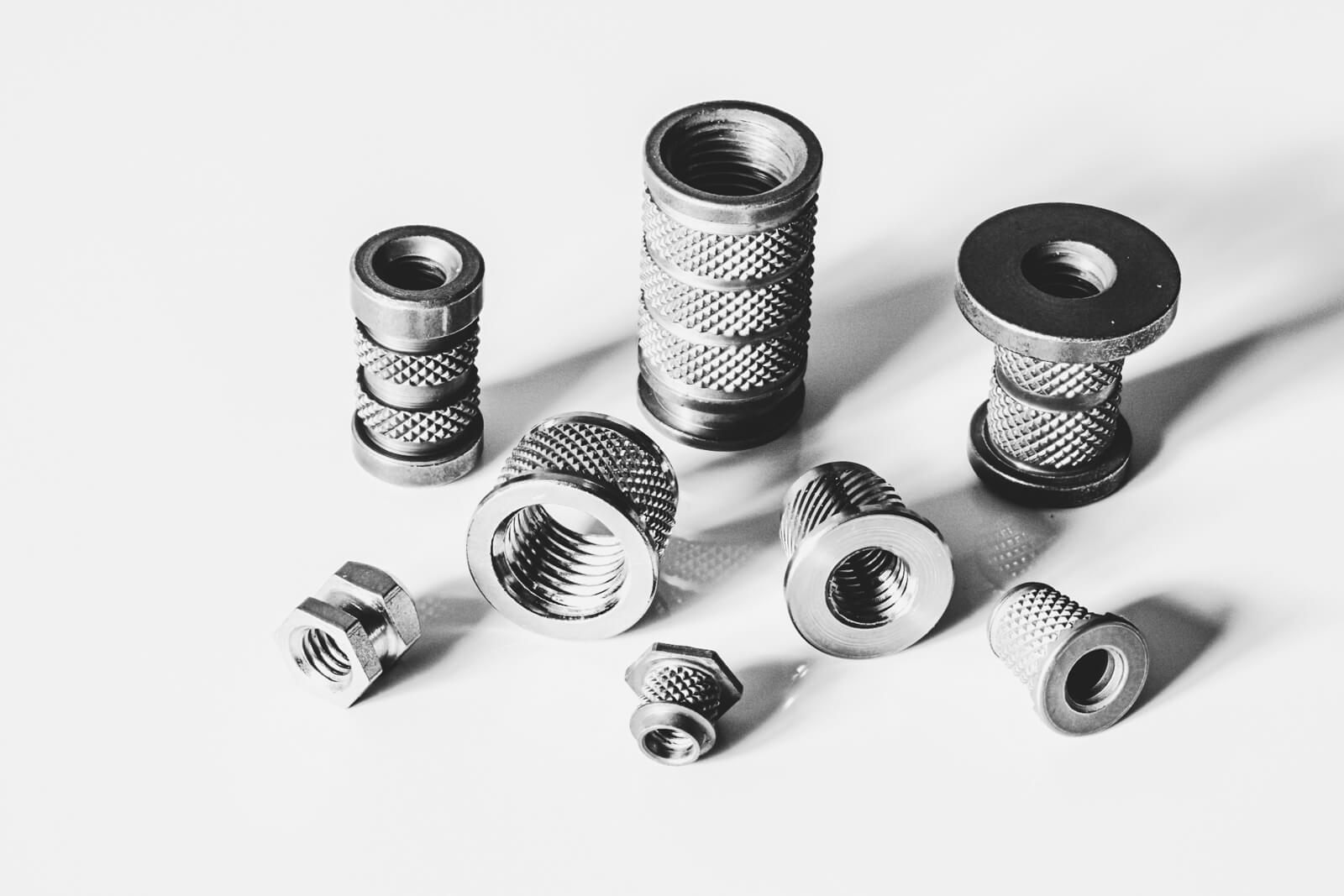
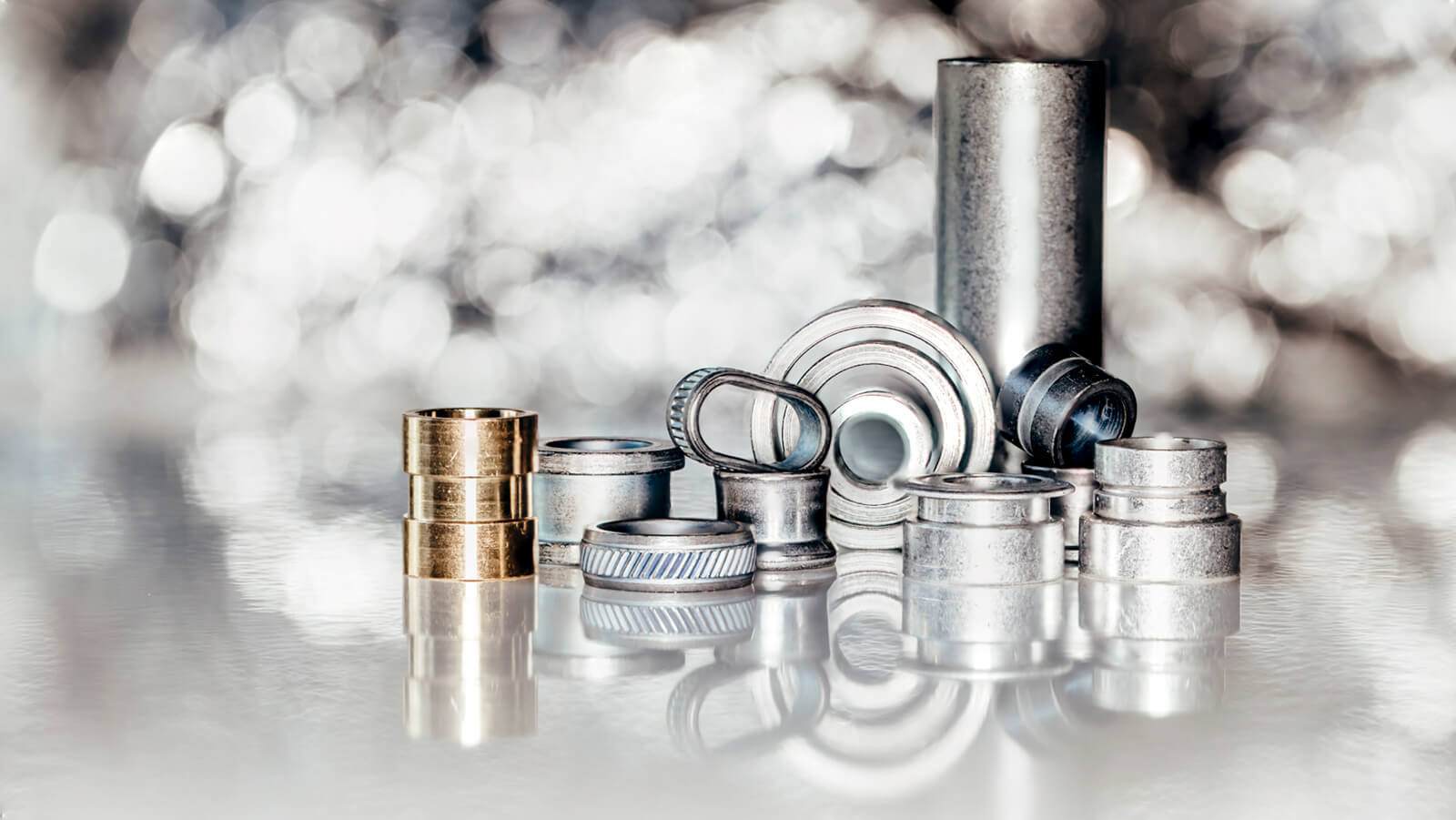
The 30°knurling allows optimal anchoring of the SOFTERFIX™ LC type in its workpiece, providing it with push-out resistance of around 300N, and liberating it from the risk inherent to the handling of workpieces during the manufacturing process and logistical transfers, as well as from those risks related to any dimensional variations in the hole receiving the limiter.
Version for overmoulding
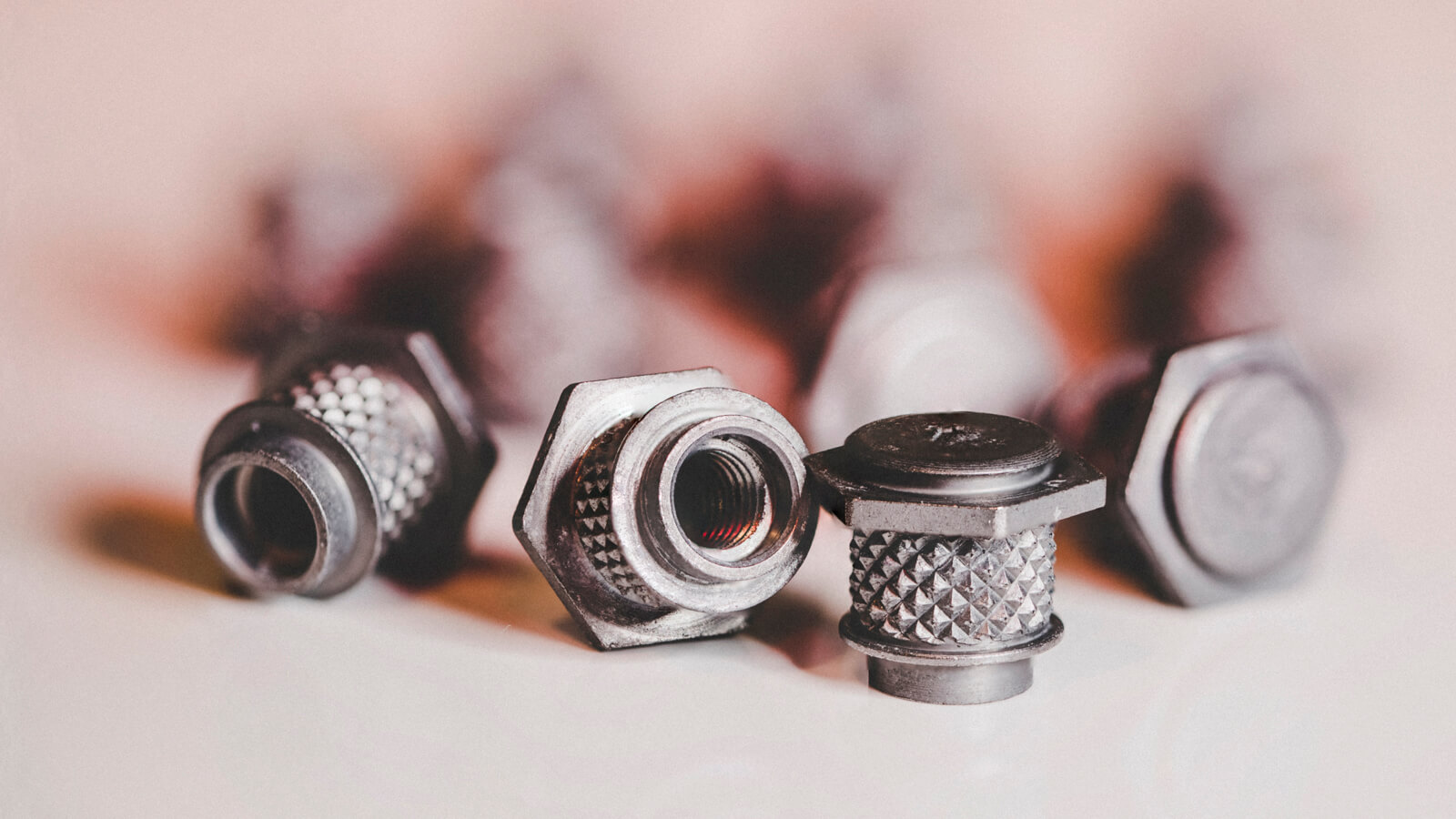
Softerfix™ LC is perfectly retained in its workpiece thanks to the diamond- shaped knurling and by the plastic collars, which imprison the limiter around the knurled section.
Advantages of the SOFTERFIX™ LC type solution
SOFTERFIX™ LC type compression limiters are knurled at the centre of the limiter's outside surface: in this way, the plastic material of the workpiece gradually flows around the knurled band and between the teeth of the knurling, creating positive retention.
Split-seam collar type inserts present an unthreaded outside surface; which offers lower resistance to extraction. In addition, these inserts apply radial pressure to the workpiece material, resulting in creep which tends to increase the diameter of the hole. This type of insert, installed with a very low retention force (for example, 20 N immediately after insertion) may find itself held in place by a force of just a few Newtons, only a few days after installation.
The split-seam collar type inserts, subject to axial pressure applied by the bolt passing through them, have a tendency to open, and thus to themselves exercise radial pressure on the workpiece in which they are inserted - resulting in increased creep phenomenon. When unscrewing the bolt, the pressure of the bolt is released, as well as that of the collar on its workpiece ; the workpiece itself is permanently deformed and the diameter of the hole can reach a value in excess of that of the collar in its initial state. In this case, retention of the collar in its workpiece is virtually non-existent. This phenomenon may be even more pronounced if the plastic part is exposed to high temperatures; we know that creep phenomenon really takes off with temperature rise.
Ease of insertion, insertion time, automation potential
Another essential criterion to be taken into consideration concerns the ease and repeatability of insertion, which will dictate the time, and therefore the cost, of installation, rendering automation of the operation possible, or not. Accurate guidance of the insert’s descent, parallel to its axis, is critical in order to avoid damaging the workpiece, as well as in enabling the simple placement of several inserts simultaneously.
Advantages of the SOFTERFIX™ LC type solution
The SOFTERFIX™ LC type compression limiters have 2 cylindrical surfaces, either side of a knurled band. In this way, these 2 surfaces, the maximum diameters of which are equal to the minimum dimension of the hole, serve as dog points for insertion, fitting into the workpiece with positive clearance, resulting in self-alignment. All that remains, then, is to exercise vertical pressure on the workpiece, to insert the collars. The assembly range allows easy simultaneous positioning of 4 (or more) inserts, and requires only a vertical insertion movement, creating potential for easy automation.
Moulding a hole
with a lead-in chamfer
On the other hand, split-seam collar type inserts present, in their intital state, a diameter that is necessarily larger than that of the hole. Their installation therefore necessitates radial compression of the collar, in order to adjust it to the diameter of the hole. This compression is achieved through a cone shape on the collar, and on the other hand through the hole entry. Yet the achievement of the cone shapes on the part necessitates the production of a shoulder pin, demanding great manufacturing precision, and rendering the mould more expensive. In addition, the chamfer can only be made on a single face of the part, thus determining the insertion face.
Cones made in this way result in very small dimensions, which may prove inadequate. The manufacturers of split-seam collars recommend implementation via the intermediary of conical insertion tools (rendering installation more complicated and increasing both the risk of jamming and insertion time) - which is not very compatible with automation.
Split-seam collars (which always tend to stick inside one another, making it difficult to extract them from the bowl feeders) present problems in automatic insert distribution. Conversely, the use of SOFTERFIX™ LC type compression limiters, which are closed in construction, enables such problems to be avoided.